Yes, PPSU fittings are safe for PPSU drinking water. This non-toxic, lead-free, and chemically inert material meets NSF/ANSI 61 and EU Drinking Water Directive standards. PPSU resists corrosion, scaling, and leaching. TOPAQUA PPSU fittings deliver trusted performance for hot and cold potable water systems.
Key Takeaways
-
PPSU fittings contain no lead or harmful chemicals. They keep your drinking water clean and safe.
-
PPSU fittings resist corrosion and scaling. They last over 50 years, even with hot water.
-
PPSU fittings meet strict safety standards like NSF/ANSI 61. You can trust them for your home's water system.
What Are PPSU Fittings?
PPSU stands for polyphenylsulfone. This high-performance engineering plastic serves as an excellent material for plumbing fittings. You get a durable, heat-resistant product when manufacturers mold PPSU into connectors, elbows, tees, and adapters. These fittings join pipes and control water flow in your drinking water system.
A Lead-Free Engineering Plastic
PPSU contains no lead, heavy metals, or toxic additives. You can trust this material to keep your drinking water clean. The plastic resists chemical reactions with water and common contaminants. PPSU also withstands high temperatures without breaking down or releasing harmful substances. TOPAQUA uses premium PPSU resin to craft fittings that meet strict safety standards. This engineering plastic delivers strength and reliability without the health risks associated with metal fittings.
Where PPSU Fittings Are Used
You find PPSU fittings across many industries and applications. Their unique properties make them ideal for demanding environments.
|
Application |
Reason for PPSU Use |
|---|---|
|
Hot water plumbing systems |
Heat resistance |
|
Chemical processing |
Chemical resistance |
|
Medical and laboratory equipment |
Durability, corrosion resistance, heat resistance |
Beyond these examples, PPSU fittings serve in pharmaceutical manufacturing, food and beverage production, steam sterilization, and high-temperature fluid transport. You also see them in residential, commercial, and industrial plumbing and heating systems. TOPAQUA PPSU fittings perform reliably in critical infrastructure where safety and longevity matter most.
Why PPSU Is Safe for PPSU Drinking Water
Non-Toxic, Lead-Free Material
Manufacturers design PPSU as a medical-grade plastic that complies with FDA requirements. You get a material naturally free from BPA, BPS, and phthalates—chemicals often present in lower-grade plastics. The same plastic forms surgical instruments and other critical medical tools. This widespread medical use proves its safety for human contact. PPSU also meets the toughest food-contact standards from the FDA, EU, and LFGB in Germany. You can trust that no lead or heavy metals enter your drinking water from these fittings.
PPSU is chemically inert and naturally free from BPA and phthalates. Its polymer structure resists hydrolysis—it does not break down when exposed to hot water. No matter how often you heat the system, the fitting will not release harmful chemicals into your water supply.
Chemical Inertness and No Leaching
PPSU does not react with water or the chemicals commonly found in plumbing systems. You benefit from a material that stays stable even under continuous hot water exposure. It does not leach toxins or heavy metals into the liquid it carries. Studies confirm that PPSU releases no harmful microplastics under normal use. This resistance to leaching holds true whether you use the fitting for cold drinking water or for hot water near boiling. When you install PPSU fittings for your PPSU drinking water system, you eliminate the risk of chemical migration from the plastic itself. The material also withstands steam sterilization without degrading, adding another layer of safety.
Resistance to Corrosion and Scaling
Unlike metal fittings, PPSU does not corrode. You never have to worry about rust, pitting, or ion leaching into your water. The material also resists scale buildup, which keeps your water flow consistent and clean. PPSU tolerates aggressive water treatment chemicals like scale inhibitors and surfactants. This makes it a reliable choice regardless of your local water hardness. The table below compares PPSU with common metal fittings:
|
Aspect |
PPSU |
Brass / Metals |
|---|---|---|
|
Corrosion resistance |
Inherently corrosion-proof |
Metals corrode; brass can degrade over time |
|
Scaling |
Less prone to scaling |
Brass alternatives more prone to scaling |
|
Water hardness tolerance |
Safe for plumbing regardless of water hardness |
Corrosivity varies with water chemistry |
|
Leaching / hygiene |
Does not leach metals into water supply |
Brass can leach metals into the water supply |
|
Cost-efficiency |
Higher long-term value due to durability |
Lead-free metals needed for threaded fittings |
You gain a plumbing solution that stays clean and functional for decades. PPSU drinking water fittings outperform metals in both health and longevity.
Certifications That Confirm Safety
Independent organizations test and certify PPSU fittings against rigorous health and safety standards. These certifications give you confidence that your PPSU drinking water system meets strict regulatory requirements.
NSF/ANSI 61 Compliance
NSF/ANSI 61 sets the benchmark for drinking water system components in North America. This standard evaluates materials for potential contaminant release into potable water. PPSU fittings pass NSF/ANSI 61 testing without issue. The material releases no harmful substances at any concentration that would affect human health. You get verified protection when you install certified PPSU fittings in your home or facility.
EU Drinking Water Directive Approval
The European Union Drinking Water Directive establishes strict quality standards for materials contacting potable water. PPSU fittings meet these requirements and carry approval for use across EU member states. Manufacturers test these fittings for chemical migration, microbial growth, and structural integrity. You receive the same level of safety whether you install PPSU fittings in Europe or North America.
Other Health and Safety Standards
PPSU fittings comply with additional standards that reinforce their safety profile:
|
Standard/Certification |
Description |
|---|---|
|
ASTM F2159 |
Standard for crimp fittings used with PEX-A and PEX-B pipes |
|
ASTM F1960 |
Standard for cold expansion fittings |
|
NSF certification |
Certification for health and safety in plumbing applications |
PPSU fittings also meet ASTM F1974, ASTM F1281, CSA B137, DIN 16836, GB18997, and ISO 21003 requirements. These fittings are lead-free and designed to be safe for drinking water supply. They are ideal for medical equipment, food processing equipment, and other applications with high safety and hygiene requirements. These fittings are proven safe for potable water systems through repeated verification and testing, and they help lower the risk of rust and corrosion.
Safe for Drinking Water: The non-toxic and lead-free nature of PPSU ensures safety in potable water systems.
Durability Under Hot and Cold Water
Temperature and Pressure Resistance
PPSU fittings handle extreme temperatures and pressures without losing structural integrity. You can rely on them for both hot and cold PPSU drinking water applications. The material withstands a maximum working temperature of 210ºF (99ºC) and a maximum working pressure of 150 psi (1034 kPa). PPSU also resists thermal degradation up to 170ºC.
Test data confirms this exceptional stability:
-
Internal pressure of 10 bar combined with 80°C produces less than 0.5% dimensional change in PPSU.
-
At 100°C and 30 MPa, PPSU shows less than 1% creep strain after 10,000 hours.
-
At 10 bar pressure and 80°C for 1 year, PPSU exhibits less than 0.3% wall expansion.
-
Thermal cycling from -20°C to 120°C over 100 cycles causes less than 0.1 mm dimensional shift in PPSU.
-
Under 134°C steam at 2 bar for 10 cycles/day, reinforced PPSU (15% glass fiber) maintains dimensional stability within ±0.05 mm after 10,000 cycles.
These results demonstrate that PPSU fittings maintain their shape and performance under the most demanding conditions.
Long-Term Reliability and 50-Year Lifespan
You get decades of dependable service when you install PPSU fittings. Most PPSU fittings deliver a service life of 50 years or more, even under demanding conditions. Regular inspections help ensure optimal performance.
|
Performance Aspect |
Details & Metrics |
|---|---|
|
Longevity |
Over 20 years in hot water, 50+ years with proper installation |
Surface properties of PPSU were fitted to a diffusion model and extrapolated to 10,000 hours (417 days). Although these properties diminish logarithmically, full reversion would take hundreds of thousands of years, demonstrating practical durability over the expected lifetime of the fittings. This long-term reliability makes PPSU a smart choice for your PPSU drinking water system.
PPSU vs. Brass Fittings

Corrosion and Heavy Metal Risks in Brass
Brass serves many fluid applications well. You should still recognize its vulnerabilities in drinking water systems. Dezincification weakens brass over time, especially in coastal or aggressive water conditions. A 2025 Australian study recorded dezincification rates of 0.3 mm per year in coastal applications. Acidic water accelerates brass corrosion by 40% compared to neutral conditions, according to a 2023 U.S. study. Mixed-metal systems fare even worse, with a 2026 Canadian study finding wear of 0.4 mm/year versus 0.1 mm/year for all-brass systems.
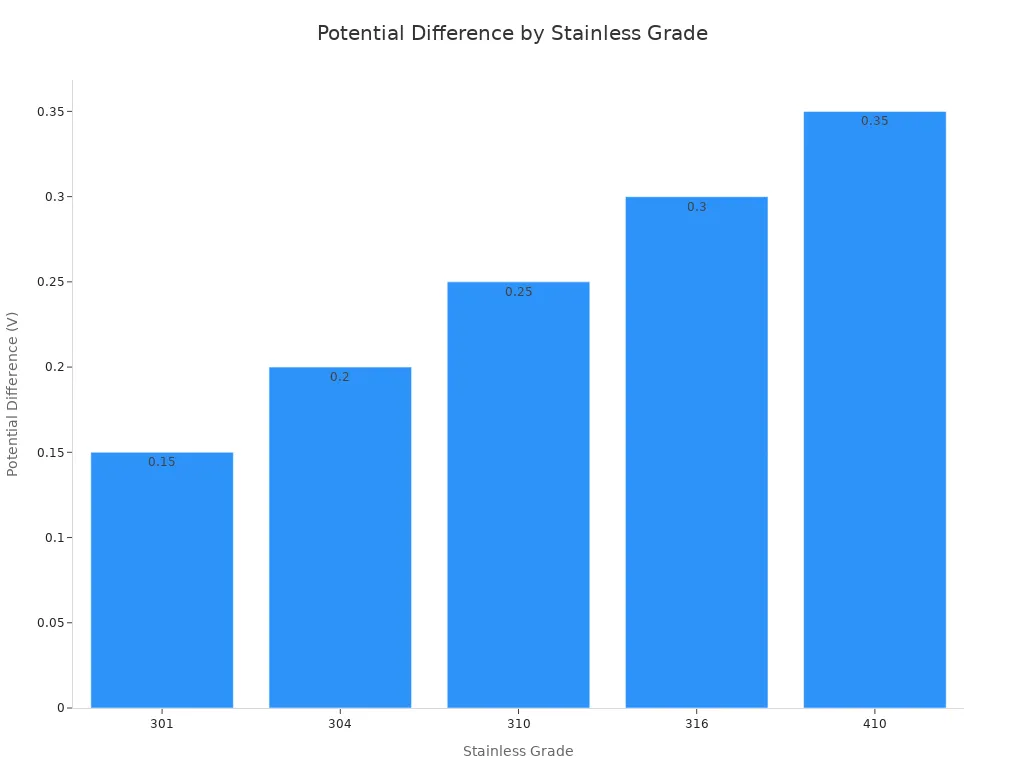
Lead contamination poses another serious concern. Untreated brass may contain up to 2% lead. A 2025 California audit found lead levels of 8 ppb in 15% of sampled schools using brass joints, exceeding EPA limits. You also face galvanic corrosion risks when brass contacts stainless steel. The chart below shows how different stainless grades perform:
Health and Performance Advantages of PPSU
PPSU eliminates the corrosion and heavy metal risks you face with brass. This material contains no lead and resists dezincification entirely. You get a completely non-toxic fitting suitable for sensitive applications. PPSU also maintains high material purity that meets modern health standards.
|
Aspect |
PPSU |
Brass |
|---|---|---|
|
Lead content |
No lead risk |
Older fittings may contain lead |
|
Corrosion resistance |
Inherently corrosion-proof |
Prone to dezincification |
|
Chemical resistance |
Withstands pH 1–13 and high chlorine |
Corrodes in acidic or high-chlorine water |
|
Thermal expansion |
Close to plastic pipes, reducing joint loosening |
Large difference vs. plastic pipes, causing leaks |
|
Service life |
Over 50 years |
Long lifespan but fails under certain water conditions |
PPSU drinking water systems benefit from these advantages. You avoid metal leaching and enjoy consistent water quality for decades.
Easy Installation and Maintenance
Installing PPSU drinking water fittings saves you time and effort compared to traditional metal alternatives. You also enjoy simpler maintenance over the system's lifetime. PPSU's material properties and design make this possible.
Lightweight, Simple Fitting
PPSU fittings weigh approximately 80% lighter than brass fittings. You handle one piece instead of a heavy metal component. This lower weight reduces fatigue during installation and lowers shipping costs for your project. The table below shows key differences:
|
Attribute |
PPSU Fittings |
Brass Fittings |
|---|---|---|
|
Weight |
Approximately 80% lighter than brass |
Heavy and dense |
|
Installation Speed |
Fast, particularly when using cold expansion |
Moderate to fast |
|
Tooling Wear |
Minimal wear on expansion/crimp tools |
Greater wear on cutting and crimping tools |
|
Inventory Weight |
Low, which helps reduce shipping costs |
High, which increases freight and handling costs |
TOPAQUA PPSU fittings retain the same strength and reliability despite their lighter build. You reduce physical strain and move through installation faster.
No Soldering or Special Tools Needed
PPSU fittings require no soldering, glue, or heavy machinery. You simply push or crimp the fitting onto the pipe. Many installations use only a cold expansion tool or a manual crimp tool. You avoid open flames and toxic fumes entirely. This simplicity speeds up your work and lowers the skill barrier. You complete connections in seconds rather than minutes. PPSU's resistance to corrosion also means you perform fewer maintenance checks. You get a reliable, long-lasting joint without complex procedures. TOPAQUA PPSU fittings streamline your plumbing work and deliver consistent results every time.
Why Choose TOPAQUA PPSU Fittings
Proven Safety and Certified Performance
TOPAQUA PPSU fittings meet the highest safety standards in the industry. You get products tested and certified by independent organizations. These fittings comply with NSF/ANSI 61 and the EU Drinking Water Directive. They also carry AENOR certification from Spain.
We are proud to announce that our PPSU fittings have officially earned the prestigious AENOR certification, ensuring compliance with the highest international standards for durability and hygiene.
This certification confirms that TOPAQUA fittings deliver reliable performance for your PPSU drinking water system. You receive verified protection against leaching, corrosion, and chemical contamination. Each fitting undergoes strict quality control before it reaches your hands.
Built for Long-Term Drinking Water Reliability
You need fittings that last. TOPAQUA PPSU fittings deliver over 50 years of dependable service. The material resists thermal degradation, pressure fluctuations, and chemical exposure. You avoid the frequent replacements that plague metal fittings.
These fittings handle temperatures up to 210ºF (99ºC) and pressures up to 150 psi. They maintain structural integrity through thousands of thermal cycles. You get consistent water quality without worrying about rust or scale buildup.
TOPAQUA designs each fitting for easy installation and minimal maintenance. The lightweight construction reduces strain during setup. You complete connections without soldering or special tools. This saves you time and money on every project.
Choose TOPAQUA PPSU fittings for certified safety and lasting reliability. You invest in a product that protects your drinking water for decades.
PPSU fittings are safe for your drinking water. The non-toxic material prevents leaching into your PPSU drinking water system. Certified compliance confirms this safety. You get durable reliability under hot and cold conditions. PPSU outperforms brass on corrosion resistance and health safety. Choose certified TOPAQUA PPSU fittings for peace of mind.
FAQ
Are PPSU fittings safe for drinking water?
Yes. PPSU fittings contain no lead or toxic additives. They meet NSF/ANSI 61 and EU standards. TOPAQUA PPSU fittings protect your drinking water.
Do PPSU fittings leach chemicals into water?
No. PPSU is chemically inert. It does not react with water or release harmful substances. You get clean water without chemical migration.
How do PPSU fittings compare to brass for drinking water?
PPSU resists corrosion and contains no lead. Brass can leach heavy metals and degrade over time. TOPAQUA PPSU fittings offer superior health safety.