When buying PPSU fittings for plumbing and potable water systems, product quality is only part of the purchasing decision. Certifications and compliance documents are equally important because they help buyers determine whether a fitting has been evaluated for the intended application and target market.
PPSU (polyphenylsulfone) is a high-performance thermoplastic used in plumbing connections where heat resistance, mechanical strength, and long-term water contact performance matter. However, choosing a PPSU fitting based on material properties alone is not enough. Buyers should also check drinking water safety requirements, product performance standards, independent certification, and the exact scope of the supplier's documentation.
For distributors, plumbing contractors, and piping system manufacturers, the key question is not simply whether a supplier claims to offer certified PPSU fittings. It is whether the specific fitting model, material, size range, and intended application are covered by valid supporting documents.
TOP AQUA develops PPSU fittings for plumbing and water supply systems, including PPSU F10 Multipress LBP fittings and PPSU PF2 Pull-On fittings. The company has announced AENOR certification for its PPSU fittings and provides product and certification information for buyers evaluating its solutions.
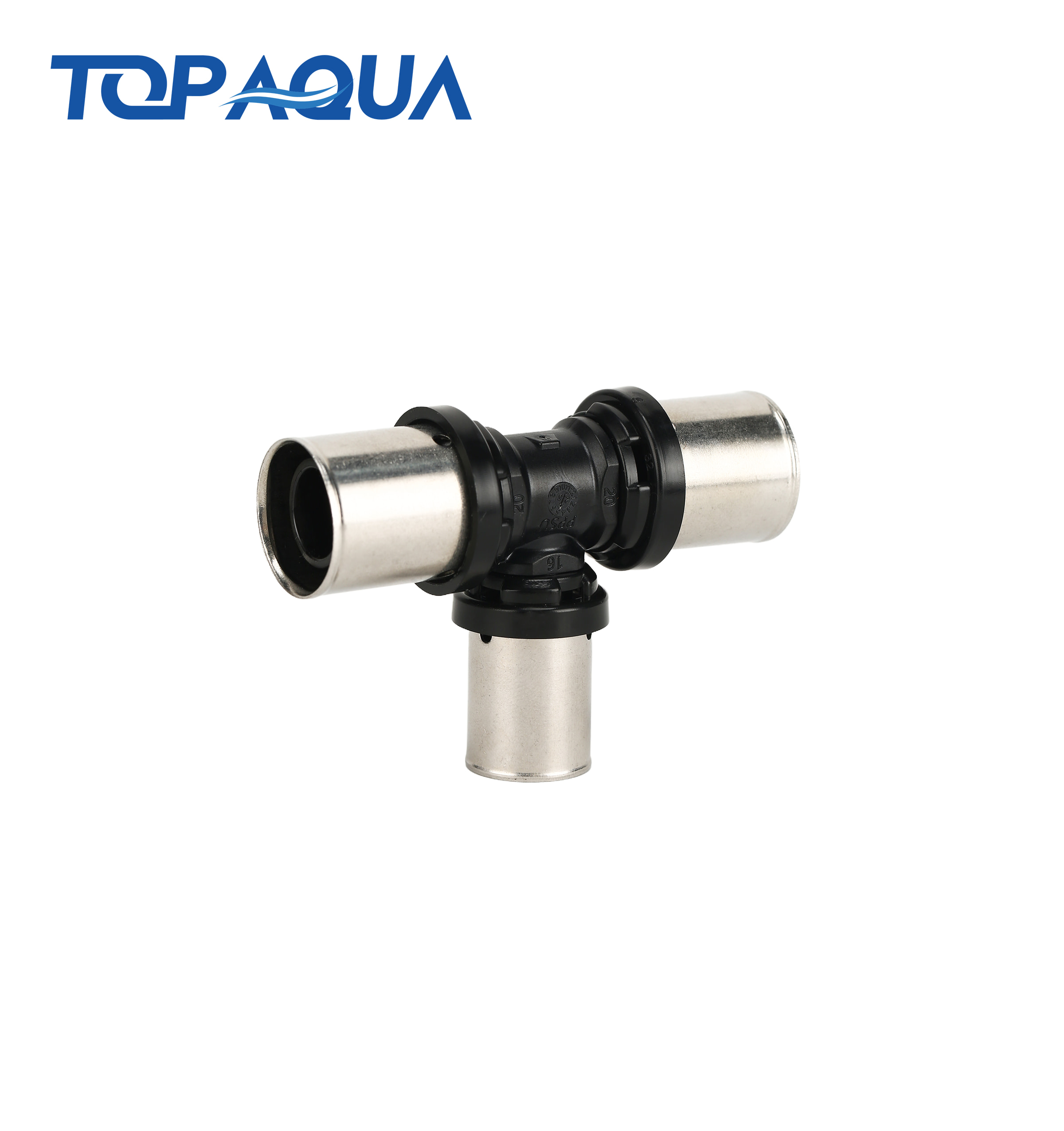
TOP AQUA PPSU multipress LBP fitting for plumbing systems
Why Do Certifications Matter When Buying PPSU Fittings?
PPSU fittings are commonly selected for hot and cold water piping systems because of the material's heat resistance, toughness, and hydrolytic stability. Yet the performance of a finished fitting depends on more than the raw PPSU resin. Its geometry, sealing components, connection design, manufacturing process, and compatibility with the pipe system also matter.
Certifications and test reports help buyers assess specific aspects of product suitability. Depending on the standard, they may address:
- Drinking water hygiene: Whether materials or components have been evaluated for potential effects on drinking water quality.
- Lead content: Whether applicable components meet defined limits for lead content.
- Mechanical performance: Whether fittings meet relevant requirements for strength, pressure, or connection performance.
- Product consistency: Whether manufacturing and quality assurance processes are subject to defined controls.
- Market acceptance: Whether a product has the approvals or evidence required by the destination market or project specification.
These documents do not all prove the same thing. A drinking water hygiene certification does not automatically demonstrate pressure performance, and a factory quality management certificate does not replace product certification. Buyers should therefore evaluate each document according to what it actually covers.
For a closer look at the product range, visit TOP AQUA PPSU F10 Multipress LBP fittings, which feature a multi-profile press connection design and a leak-before-press function.
NSF/ANSI 61: A Key Standard for Drinking Water Safety
NSF/ANSI/CAN 61 is one of the most important standards to investigate when sourcing fittings intended for potable water systems, particularly for projects in the United States and Canada.
The standard establishes health-effects requirements for materials, components, and products that come into contact with drinking water. It evaluates whether contaminants or impurities may be introduced into water through contact with the product under specified conditions.
For PPSU fittings, NSF/ANSI 61 is relevant because the fitting is part of the water distribution system and its wetted materials may come into contact with drinking water.
When a supplier claims that a PPSU fitting is NSF/ANSI 61 certified, buyers should verify:
- Whether the exact fitting model is included in the certification.
- Whether the certification covers the relevant material and product configuration.
- Whether the listed sizes and product variants match the purchasing specification.
- Whether the certification applies to the intended drinking water use and operating conditions.
- Whether the certification is current and can be confirmed through the certification body's official records.
It is important to distinguish between a product that has been independently certified and a supplier statement that a material or product complies with a standard. Ask for the actual certificate or listing information rather than relying only on a logo or statement in a product catalog.
For official standard information, buyers can refer to the NSF/ANSI/CAN 61 testing and certification overview.
NSF/ANSI 372: Check Lead Content Requirements Separately
NSF/ANSI/CAN 372 addresses lead content in drinking water system components. It is relevant when buyers need to demonstrate that applicable plumbing components meet defined lead-content requirements.
However, NSF/ANSI 372 and NSF/ANSI 61 serve different purposes:
- NSF/ANSI 61: Evaluates potential health effects associated with substances that may enter drinking water from materials and components.
- NSF/ANSI 372: Focuses on the lead content of drinking water system components.
Passing one standard does not automatically demonstrate compliance with the other. Depending on the market and applicable regulations, a project may require evidence covering both lead content and drinking water health effects.
Buyers should also avoid assuming that a PPSU body alone determines the compliance status of the complete fitting. The full product configuration, including any metal inserts, sealing elements, and other wetted components, may need to be considered.
When reviewing a supplier's documentation, confirm which components are covered and whether the certificate or test report applies to the complete fitting assembly or only a particular material.
WRAS Approval for Plumbing Products in the UK
For buyers supplying plumbing products to the United Kingdom, WRAS approval is another important item to investigate. WRAS stands for the Water Regulations Advisory Scheme, which provides a product approval route for water fittings assessed against applicable UK water regulations requirements.
WRAS approval is not a general certificate for every product made by a manufacturer. It applies to the products and configurations covered by the relevant approval. A fitting's material, components, installation conditions, and approved use should all be checked.
Before purchasing PPSU fittings for a UK project, ask the supplier to provide:
- The WRAS approval number or official product listing.
- The approved product name, model, and relevant size range.
- The approval's validity period and any renewal information.
- Any conditions or limitations associated with installation and use.
A supplier may state that its PPSU material or product range meets WRAS-related requirements. Buyers should still verify whether the exact finished fitting is included in a current approval. Material-level information should not be treated as proof that every assembled product is WRAS approved.
KTW and German Drinking Water Hygiene Requirements
For projects in Germany and other markets that reference German drinking water hygiene requirements, buyers may encounter terms such as KTW and KTW-BWGL.
These requirements relate to the hygienic suitability of materials and products that come into contact with drinking water. They are especially relevant when evaluating polymers, elastomers, and other non-metallic materials used in plumbing systems.
When a PPSU fitting supplier mentions KTW compliance, buyers should clarify the exact regulatory or testing basis being referenced. The term alone does not identify the full scope of an approval or prove that every product configuration has been assessed.
Useful questions include:
- Does the document cover the PPSU material, the finished fitting, or both?
- Are all wetted components included in the assessment?
- Does the documentation apply to the intended water temperature and contact conditions?
- Is the document accepted for the specific project and market?
This distinction is particularly important for fittings that combine a PPSU body with additional polymer, metal, or elastomer components.
AENOR Product Certification: What Buyers Should Verify
AENOR is a Spanish certification organization that provides product certification and other conformity-related services. An AENOR product certificate can provide independent evidence that the product within its defined scope has been assessed against the applicable requirements.
TOP AQUA announced on November 3, 2025, that its PPSU fittings had obtained AENOR certification in Spain. The company also presents AENOR certification as a product advantage on its PPSU F10 Multipress LBP product page.

AENOR product certificate displayed on the TOP AQUA website
For procurement purposes, the presence of an AENOR certificate is a useful starting point, but buyers should review the certificate itself and confirm its scope before placing an order.
In particular, check:
- Certificate holder: Confirm that the named company matches the supplier or manufacturer responsible for the product.
- Product scope: Identify the specific PPSU fitting series, models, or product families covered.
- Applicable requirements: Check which technical standards or specifications form the basis of certification.
- Validity: Confirm the issue date, expiry date if applicable, and current status.
- Manufacturing location: Where relevant, verify whether the production site is included in the certification arrangements.
One important point: an AENOR certificate should not automatically be interpreted as a substitute for every drinking water approval required in another country. The destination market's regulations and project specifications still determine which documents are necessary.
Buyers can review TOP AQUA's certification information and its published AENOR PPSU fittings certification announcement for further details.
Product Performance Standards and Test Reports Matter Too
Drinking water certifications are important, but they do not necessarily cover every mechanical or installation requirement of a PPSU fitting. Buyers should also review relevant product standards, technical specifications, and performance test reports.
Depending on the connection type and piping system, relevant standards may include requirements or test methods covering:
- Hydrostatic pressure resistance.
- Pull-out or connection retention performance.
- Thermal cycling and temperature resistance.
- Pressure fluctuations and water hammer resistance.
- Dimensional accuracy and pipe compatibility.
- Leakage performance after installation.
For example, TOP AQUA's published product information describes its PPSU F10 Multipress LBP fittings as compatible with U, TH, and RFz press profiles and equipped with a leak-before-press function. The product page also lists a maximum working pressure of 10 bar and a maximum operating temperature of 180°C.
These are product specifications, not a replacement for checking the applicable certification or test documentation. Buyers should confirm the operating limits and press-tool compatibility for the exact fitting and piping system being specified.
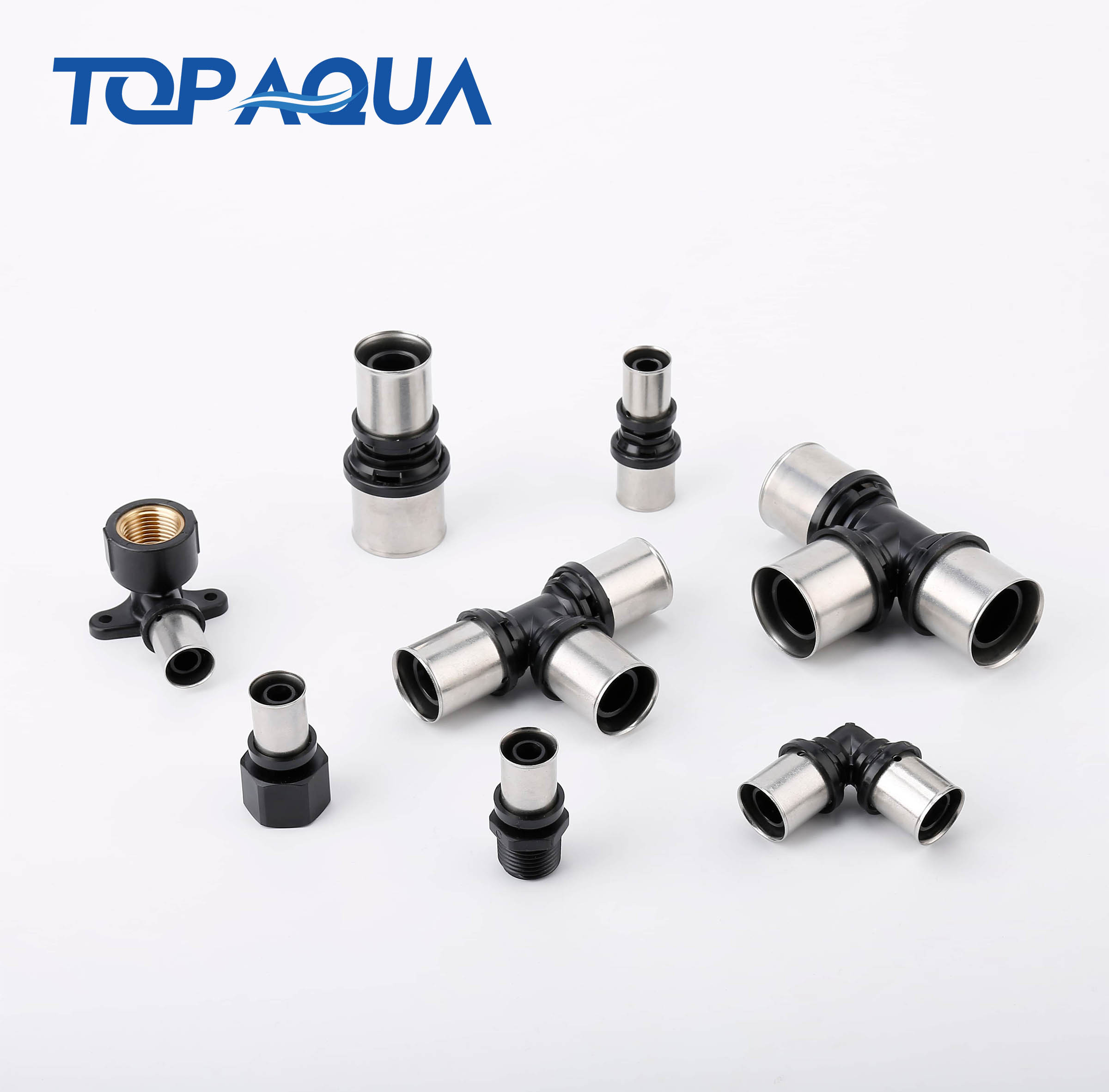
TOP AQUA PPSU pull-on fittings in different connection configurations
For projects using pull-on connections rather than press fittings, buyers can also review TOP AQUA PPSU PF2 Pull-On fittings. The connection design and applicable test requirements may differ, so documentation should be checked against the selected product series.
Do Not Confuse Product Certification with ISO 9001
ISO 9001 is a quality management system standard. It evaluates how an organization manages processes related to quality, including documented procedures, responsibilities, monitoring, and continual improvement.
For buyers, an ISO 9001 certificate can be useful when assessing a manufacturer's quality management practices. However, it does not independently prove that a specific PPSU fitting is approved for drinking water use or meets a particular pressure performance requirement.
It is helpful to distinguish between these types of evidence:
- Product certification: Applies to defined products or product families that have been assessed against specified requirements.
- Material compliance documents: Provide information about the raw materials or components used in production.
- Performance test reports: Record the results of particular tests under stated conditions.
- Quality management certification: Relates to the manufacturer's management system and quality processes.
A reliable supplier should be able to explain which documents are available and what each one demonstrates. This makes it easier for procurement teams to assess product suitability without treating every certificate as interchangeable.
To understand TOP AQUA's company background and manufacturing focus, visit the TOP AQUA company profile.
How to Verify PPSU Fittings Certificates Before Ordering
Before confirming a purchase order, buyers should follow a consistent document-checking process. This is especially important for distributors, importers, and contractors supplying products for regulated plumbing projects.
- Request the complete certificate: Ask for the original PDF or an official certification listing, not just a product brochure image.
- Check the certificate holder: Confirm the legal company name and any relevant manufacturing site information.
- Match the product model: Compare the certificate scope with the fitting series, model number, dimensions, and components being purchased.
- Check the applicable standard: Make sure the document covers the actual requirement, such as drinking water hygiene, lead content, or mechanical performance.
- Verify the current status: Check the issue date, validity period, renewal status, and official certification database where available.
- Review test conditions: Confirm whether the test results apply to the intended temperature, pressure, water conditions, and installation method.
- Keep records with the order: Save the approved certificates, technical data sheets, product drawings, and test reports as part of the procurement documentation.
For large projects, it is also sensible to obtain written confirmation that the supplied products will match the approved configuration. If a supplier changes the resin grade, sealing components, manufacturing location, or product design, the original documentation may need to be reviewed again.
Which PPSU Fittings Certifications Should You Prioritize by Market?
The right certification checklist depends on where the fittings will be installed and how the piping system will be used. There is no single certificate that automatically satisfies every country's requirements.
- United States and Canada: Check the applicable drinking water requirements, including NSF/ANSI/CAN 61 and lead-content requirements such as NSF/ANSI/CAN 372 where relevant. Additional plastic piping system standards may apply to the product and installation.
- United Kingdom: Check whether the product requires WRAS approval or other evidence accepted under the applicable UK water regulations.
- Germany: Review the applicable German drinking water hygiene requirements, including relevant KTW-BWGL provisions for materials in contact with drinking water.
- Spain and other European markets: Review applicable national requirements, product certification, and relevant European or local regulations. An AENOR certificate may provide useful product evidence, but its scope and acceptance for the project must be confirmed.
- International projects: Start with the destination country's plumbing regulations and the project specification. Ask the supplier to map each required approval to the relevant product model and supporting document.
Do not select a fitting solely because it carries a familiar certification logo. The approval must match the product, intended application, and market where it will be used.
Why Consider TOP AQUA for PPSU Fittings?
TOP AQUA FLOW CONTROL CO., LTD. provides piping system solutions for plumbing, gas, and heating applications. Its product portfolio includes PPSU fittings, brass fittings, multilayer pipes, valves, manifolds, and related installation tools.
For PPSU fittings, TOP AQUA offers two product series designed for different connection requirements:
- PPSU F10 Multipress LBP fittings: A multi-profile press fitting series compatible with U, TH, and RFz press profiles, featuring a leak-before-press function.
- PPSU PF2 Pull-On fittings: A pull-on connection series using a PVDF sleeve as part of its connection design.
TOP AQUA has publicly announced AENOR certification for its PPSU fittings and provides product-specific technical information through its website. The company also identifies its PPSU manufacturing facility in Guangzhou, China.
For distributors, wholesalers, and plumbing system partners, the practical next step is to match the required certification and technical documentation to the exact PPSU fitting series, size, and destination market. This helps ensure that purchasing decisions are based on verifiable product information rather than general certification claims.
If you are sourcing PPSU press fittings or pull-on fittings for a plumbing project, you can contact TOP AQUA to discuss product specifications, available certificates, and technical documentation.
Frequently Asked Questions About PPSU Fittings Certifications
What certifications should I look for when buying PPSU fittings?
For potable water applications, check the certifications and approvals required by the destination market. Common documents to investigate include NSF/ANSI/CAN 61, NSF/ANSI/CAN 372 where applicable, WRAS approval for relevant UK projects, German drinking water hygiene documentation such as KTW-BWGL, and applicable product certifications such as AENOR. Always verify the exact product scope.
Is NSF/ANSI 61 important for PPSU fittings?
Yes. NSF/ANSI/CAN 61 evaluates the potential health effects of materials and components that come into contact with drinking water. Buyers should confirm that the exact PPSU fitting model and its relevant wetted components are covered by a valid certification or listing.
What is the difference between NSF/ANSI 61 and NSF/ANSI 372?
NSF/ANSI/CAN 61 addresses potential health effects from substances that may enter drinking water through contact with materials and components. NSF/ANSI/CAN 372 focuses on lead content. They address different requirements and are not interchangeable.
Do PPSU fittings need WRAS approval for the UK market?
WRAS approval may be relevant for plumbing products supplied to UK projects, depending on the product and applicable water regulations. Buyers should check the required approval route and verify that the exact fitting model is covered by a current approval.
What does AENOR certification mean for PPSU fittings?
AENOR product certification indicates that products within the certificate's defined scope have been assessed against applicable requirements. Buyers should check the certificate holder, product models, technical basis, validity, and manufacturing scope before relying on it for a project.
Is ISO 9001 enough to prove that PPSU fittings are safe for drinking water?
No. ISO 9001 relates to a company's quality management system. It does not independently establish that a specific PPSU fitting meets drinking water hygiene or product performance requirements. Product-specific certifications and test documents may also be necessary.
How can I verify whether a PPSU fitting certificate is valid?
Request the complete certificate or official product listing. Check the certificate number, issuing organization, certificate holder, covered models, applicable standard, validity status, and any product or installation limitations. Where possible, verify the information through the certification body's official database.
Has TOP AQUA obtained AENOR certification for its PPSU fittings?
TOP AQUA announced on November 3, 2025, that its PPSU fittings had obtained AENOR certification in Spain. Buyers should consult the company's certification information and request the current certificate details to confirm the scope applicable to their selected product.
What documents should I request from a PPSU fittings supplier?
Request applicable product certificates, material information, technical data sheets, dimensional drawings, pressure and temperature specifications, relevant test reports, and installation instructions. The required documents depend on the fitting type, piping system, and destination market.
When buying PPSU fittings, the most useful certification is the one that matches the exact product and the requirements of the project. By checking certificate scope, product models, applicable standards, and supporting test documents, buyers can make more informed decisions and reduce compliance risks when sourcing plumbing components.